by Jeff Jerebker and Gail Meehan
There is one destination all of humankind shares, yet it is rarely spoken of openly. We circle around it, defer it, dress it in clinical language — and in doing so, we rob ourselves of something important. So let us speak of it plainly: death is coming for all of us. And how we meet it matters.
This raises a question worth sitting with: is it the responsibility of our healthcare system to help ensure a peaceful death — one that honors the wishes and dignity of the dying person? We believe it is. But before we can reform a clinical system, something more fundamental needs to be examined. Individually, we need to examine the concept of our impermanence and what we would desire to ensure for our peaceful transition. We can then express our desires, so they are honored.
Death is as natural as birth. The completion of life’s marathon. As Gail Meehan, my co-host, stated tongue-in-cheek: “Death, it takes your breath away!” But it is so true!
And yet a peaceful death, at its core, requires exactly that: the willingness to let go. The great spiritual traditions across cultures converge on this point. Letting go is not resignation. It is the highest practice. And life, if we pay attention, has been training us for it all along.
Every ending we have ever survived was practice. Every relationship that ran its course, every identity we outgrew, every door that closed and — sometimes slowly, sometimes surprisingly — opened onto something new. Letting go throughout life reveals new possibilities, new paths, and new adventures. Why should death be any different? By the time we arrive at it, we have had a lifetime of rehearsal.
Impermanence is woven into everything. It is life.
It is the yin and the yang — the ancient understanding that nothing exists without its opposite, that light needs darkness, that endings make beginnings possible. We see it in the natural world with a clarity that should stop us in our tracks. The flower blooms, blazing with color, offering its brief promise of beauty and renewal. Then it withers as summer fades. The trees of autumn — burning gold and red — signal something most of us recognize instinctively as the elder season of life: the brightness that arrives just before winter. Winter, which we call death. And then, faithfully, spring.
The cycle does not mourn itself. It simply turns.
The most basic principle of spiritual life, across nearly every tradition, is this: let go. Resist, and life becomes suffering. Surrender — not in defeat, but in trust — and life becomes peaceful. The more freely we release, the more equanimity we carry into whatever comes next.
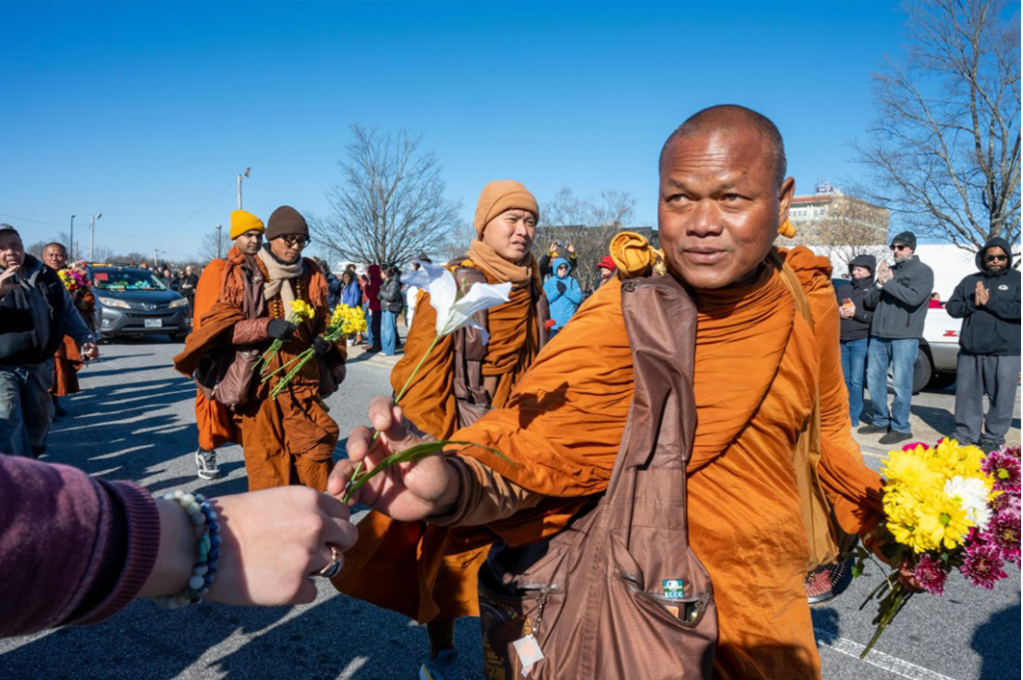
There is a beautiful illustration of this from the Buddhist tradition. The venerable Buddhist Walk for Peace undertook a 2,700-mile trek from Fort Worth, Texas to Washington, D.C. Along the route, people lined the roadways and offered flowers to the monks as they passed. The monks accepted each one graciously — and then, a little further down the road, passed it along to someone else watching from the shoulder. A small gesture. A complete teaching. Nothing held. Nothing wasted. Everything was offered and released in its time.
When we make peace with the impermanent nature of life, something shifts. We grow quieter. More tolerant. More humble. And gradually, the fear of dying — that great background terror so many of us carry — begins to loosen its grip.
What replaces it is something closer to comfort: the understanding that we are part of a regenerative circle far larger than ourselves. Your death will contribute to new life. Everything that dies does. The flower, the leaf, the elder at the end of winter — all of it feeds the spring.
We are not departing from life. We are returning to it.

 The Tao of Aging
Leave a comment