
by Jeff Jerebker
I have always lived at the intersection of the scientific and the spiritual. It’s a place where Einstein’s theories meet the mystic teachings of Paramahansa Yogananda, creating a bridge between East and West. Yet, even within that spiritual framework, there is profound wisdom to be found in the raw, everyday cycles of gain and loss, love and grief, ecstasy and pain.
There were seasons in my life when the sheer mystery of the universe felt unfathomable, leading to existential struggles and personal downturns. In those moments, I found an unlikely sanctuary: the sociology of the absurd. Through its many forms, it offered a soothing balm—laughter masking the underlying suffering, yet serving a vital purpose in my journey.
During my master’s program at University of Wisconsin – Milwaukee, the “Sociology of the Absurd” wasn’t a formal course, but it haunted the margins of our texts. I found myself drawn to Albert Camus, the father of absurdism. He famously wrote, “I do not believe in God, and I am not an atheist.” Camus viewed the universe as a chaotic, random landscape devoid of divine order—the very definition of absurd. As an existentialist, however, he argued that while the universe may lack inherent meaning, we are still free to create our own. It is a paradox that births both conflict and humor. Back then, I desperately needed the latter; I needed to laugh.
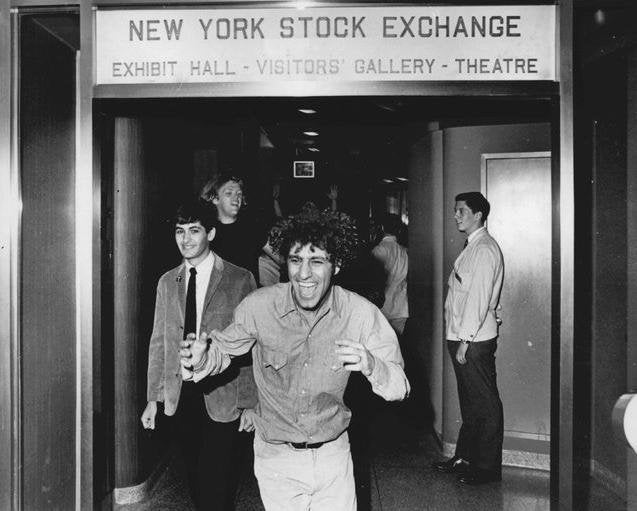
That search for humor led me to the Yippies (Youth International Party). While other student groups, like the rigid Neo-Marxists, were defined by ideological austerity, the Yippies embraced a radical counterculture of the unexpected. Founded by Abbie Hoffman and Jerry Rubin, they were anti-war and pro-civil rights, but they fought their battles with absurdist street theatre. I remember the story of them throwing money onto the floor of the New York Stock Exchange and filming the ensuing scramble—a perfect, mocking illumination of consumerist greed.
They called this “guerrilla theatre.” It was improvised and designed to highlight societal meaninglessness through unexpected drama. It was a lesson I carried with me long after I left academia.
By the early 80s, my professional life at Piñon Management was booming, but my personal world felt disoriented and fractured. To cope, I would retreat to a movie theatre in lower downtown Denver to watch the Marx Brothers. I’d smoke a joint, grab some popcorn, sit in the very back to be alone, and let their genius wash over me. Their brand of absurdity was more than just slapstick; it was a subtle, sharp critique of the bourgeoisie. Leaving the theatre, I always felt refreshed. The world made sense again, precisely because it was absurd.
The Marx Brothers’ influence on the Yippies was unmistakable. Once, when authorities criticized the Yippies for being “Marxist-Lennonists,” they happily agreed—clarifying they meant Groucho Marx and John Lennon, not the architects of communism.
A “Yippie” Moment at Piñon Management
I saw this spirit of guerrilla theatre alive and well years later during a project with the Department of Human Services. We were just weeks into a massive undertaking involving State Veterans’ nursing homes when the department called a “meet-and-greet” for leadership and veteran advocates. A representative named Liz had just begun handing out the agenda when two veterans—leaders of the United Veterans Committee of Colorado—stood up.
“Thank you, Liz,” they said, “but we are taking over the meeting.”
When she objected, insisting it was a government-run meeting, they held their ground: “It is now a Veterans’ meeting.”
I leaned over and whispered to my CFO, “The Yippies are still alive!” It was a bloodless, brilliant coup that perfectly illuminated the shift in power.
I still believe that life is a spiritual journey, and that meaning can be found in many forms. For me, absurdism and existential philosophy are simply tools for navigating the complexities of the universe. Guerrilla theatre may have evolved, and the Yippies may no longer exist as a formal group, but their contribution to the countercultural movement of the 60s and 70s remains. I am grateful for the laughter they provided and the reminder that, in a chaotic world, sometimes the most profound thing you can do is find the humor in the scramble.
 The Tao of Aging
Leave a comment